Laptop access across Tampa communities in 2025

In many parts of Tampa, the day often begins the same way: a shared table, an open notebook, a borrowed phone used for a few minutes of connectivity. For a long time, for many families, studying meant adapting to whatever was available.

In 2025, in some of those spaces, something changed.

It started simply because a laptop became available. In a home, a classroom, or a community program. And that presence began to shift other things as well: assignments were no longer postponed, turns became shorter, and more time could be spent in front of a screen.

At Digital Education Foundation, this is where our work takes place. The moment when technology enters everyday life and starts being used in a real, consistent way.

When technology stops being a promise

Throughout 2025, different areas of Tampa incorporated technology into their educational routines. Not all situations were the same. Some families had never owned a computer before. In others, a single laptop had to be shared among several students. In certain educational spaces, access depended on strict schedules and rotations.

Of course, the arrival of a laptop does not solve everything. But it creates a new starting point. It allows students to study without waiting, to research without relying on others.

This is where technology stops being an idea and becomes action. Learning, practicing, submitting assignments, communicating—everyday verbs that sustain education.

Even when the stories are different

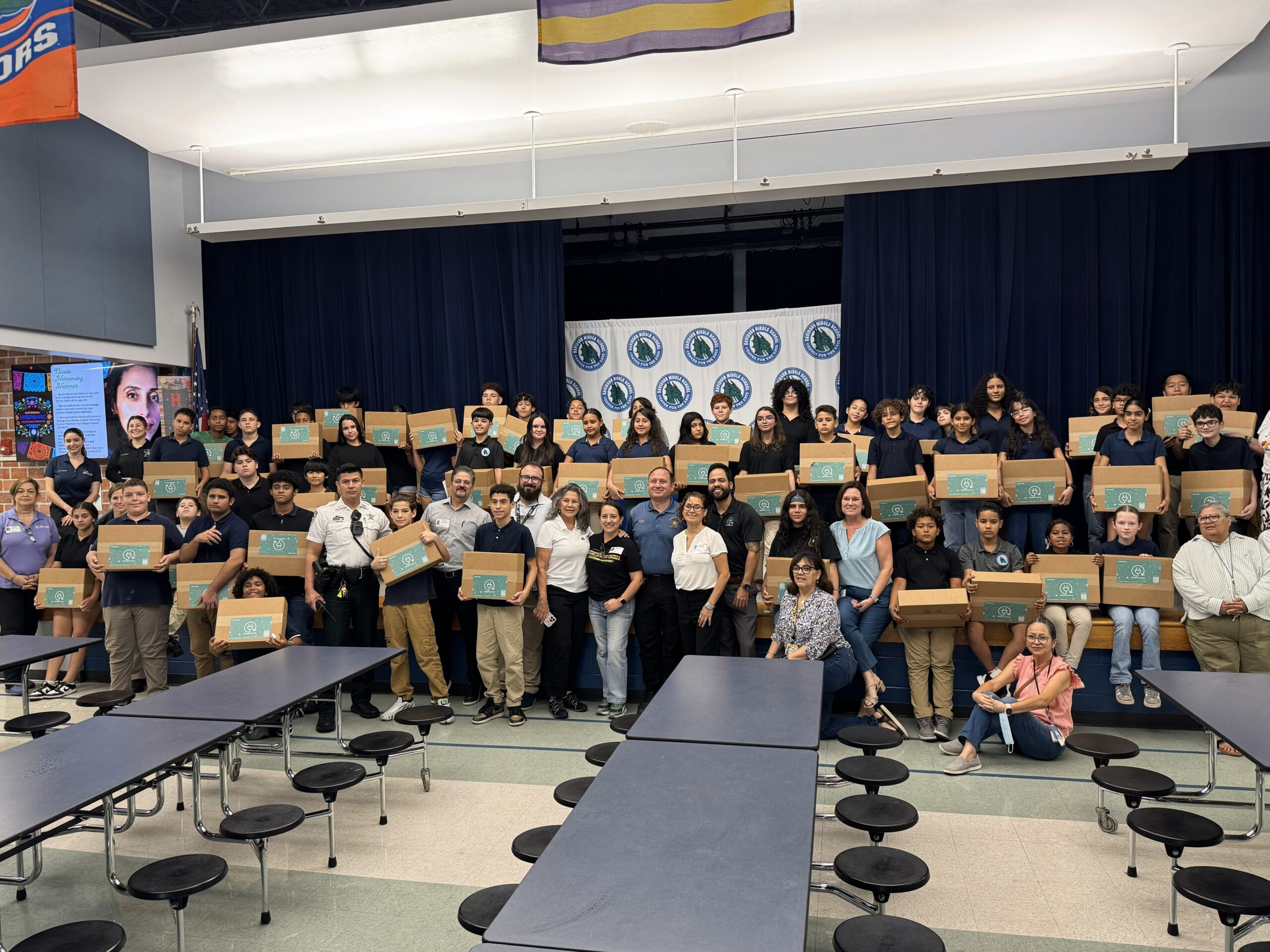
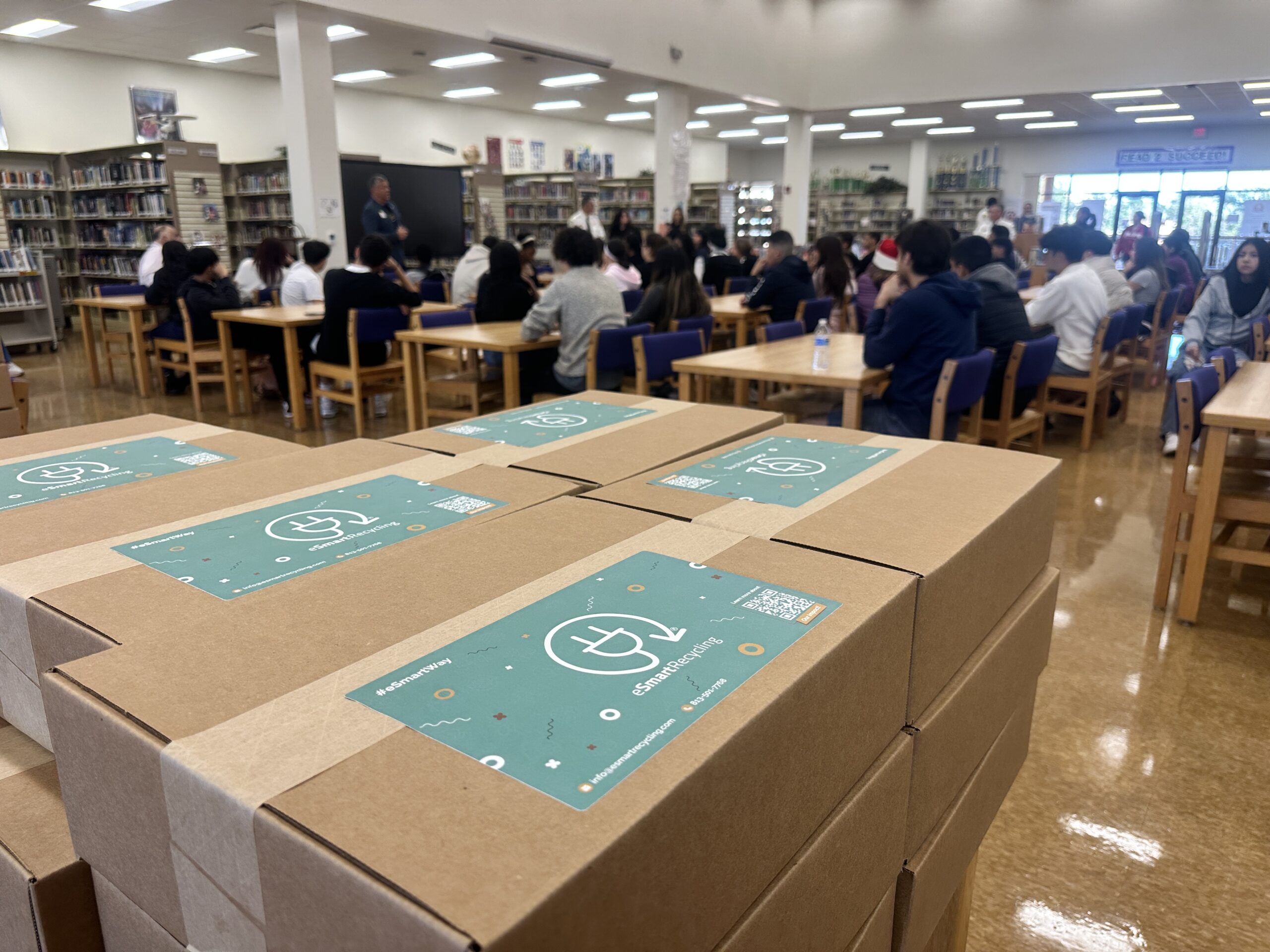
Over the course of the year, more than five hundred devices were integrated into educational and community programs. Most were laptops. Each one ended up fulfilling a specific role within a particular context.

In collaboration with organizations such as Hillsborough Education Foundation, laptops were incorporated steadily into programs that were already in place. That continuity ensured that access was not a one-time event, but part of a structure that supported students and families over time.

In other programs, such as those associated with SHAC, the needs were different. What mattered was not where the devices came from, but how they were used. That they were there when they were needed.

Although the contexts varied, one thing remained consistent: once a laptop became part of the daily routine, access stopped being an immediate barrier.

Access is not ownership

Talking about how many people benefit is never simple. In many households and community spaces, a laptop is shared. It moves from one set of hands to another or is used at different times of the day. That is why numbers help explain scale, but they do not capture what happens around a family table or inside a classroom.

What does repeat is the starting point. Someone decided that a laptop would not stay stored away, forgotten, or discarded.

“Choosing to properly recycle that old laptop in your closet instead of throwing it away,” as Tony Selvaggio, CEO of eSmart Recycling, has often noted.

That decision, made far from where the device is eventually used, ends up having very real consequences in the lives of others.

Our perspective

Looking at the year as a whole, it became clear that the work succeeds when each part of the system fulfills its role and trusts the others.

“After 11 years, the fruit of our collective hard work is a clear model where business and impact, instead of competing, reinforce each other,” reflected Tony Selvaggio.

From the Digital Education Foundation’s perspective, this translates into something simple: education depends on access. And access does not appear on its own. It is built through relationships, collaboration, and a network that understands the ultimate goal is not the device itself, but what it allows people to do.

None of this happens in isolation.

“We are not alone; we have a fantastic team behind the scenes making this a reality,” he added.

What remains when the year ends

As 2025 comes to a close, the laptops remain. In homes. In schools. In community programs. Becoming part of routines that no longer depend on constant improvisation.

“The devices will keep moving. The partnerships will keep growing. And the mission to turn yesterday’s technology into tomorrow’s opportunity is stronger than ever,” said Tony Selvaggio.
“We are just getting started.”

From the Digital Education Foundation’s point of view, 2025 is not remembered for the number of devices, but for what those devices made possible. More access. More continuity. More real opportunities to learn.

That was the year. And the work continues.
MORE ARTICLES:

Do your data disappear when recycling laptops in Tampa?

Laptop access across Tampa communities in 2025

Giving students access through recycled laptops in Tampa

Did you Like what your read? Help us spread the word 💪

“Every story we tell is a chance to bring someone new into this movement.”

Dannet Leon

Marketing & Communications Manager

Storyteller. Strategist. Builder of bridges.

Dannet leads storytelling and strategic communication at DEF, where they connect mission to message across partnerships, campaigns, and digital platforms. With experience in purpose-driven marketing and social impact storytelling, they shape the narratives that help donors, sponsors, and community partners see themselves in the work of bridging the digital divide.
From crafting pitch decks and donor campaigns to amplifying student success stories, Dannet ensures the impact of DEF is seen, felt, and supported—online and off.
Tony founded the Digital Education Foundation to scale that impact, designing turnkey programs that empower students, schools, and families through refurbished technology and digital literacy. His work is driven by a core belief: technology is more than a tool—it’s a lifeline to education, employment, and equity.

Dannet Leon

Founder & CEO

Storyteller. Strategist. Builder of bridges.

Dannet leads storytelling and strategic communication at DEF, where they connect mission to message across partnerships, campaigns, and digital platforms. With experience in purpose-driven marketing and social impact storytelling, they shape the narratives that help donors, sponsors, and community partners see themselves in the work of bridging the digital divide.
From crafting pitch decks and donor campaigns to amplifying student success stories, Dannet ensures the impact of DEF is seen, felt, and supported—online and off.
Tony founded the Digital Education Foundation to scale that impact, designing turnkey programs that empower students, schools, and families through refurbished technology and digital literacy. His work is driven by a core belief: technology is more than a tool—it’s a lifeline to education, employment, and equity.

“Every story we tell is a chance to bring someone new into this movement.”

“When we connect families to technology, we connect them to possibility.”

Veatrice Farrell

Chief Community Officer

Equity strategist. Connector. Grant-getter.

Veatrice leads DEF’s community strategy, championing access to technology for historically excluded populations. In 2025, her leadership helped secure a $6.9M federal grant recommendation from the NTIA to expand digital literacy across St. Petersburg—one of only a few projects selected nationwide.
With a background in banking and over a decade of community revitalization experience as Executive Director of Deuces Live, she brings both strategic insight and grassroots credibility. Veatrice ensures every DEF program—whether a Tech Hub, device drive, or training series—is rooted in real community need. She also co-leads Hypatia Collaborative and serves on several local arts boards, furthering her commitment to equity and cultural empowerment.

Veatrice Farrell

Chief Community Officer

Equity strategist. Connector. Grant-getter.

Veatrice leads DEF’s community strategy, championing access to technology for historically excluded populations. In 2025, her leadership helped secure a $6.9M federal grant recommendation from the NTIA to expand digital literacy across St. Petersburg—one of only a few projects selected nationwide.Tony founded the Digital Education Foundation to scale that impact, designing turnkey programs that empower students, schools, and families through refurbished technology and digital literacy. His work is driven by a core belief: technology is more than a tool—it’s a lifeline to education, employment, and equity.

“When we connect families to technology, we connect them to possibility.”

“We’re not just recycling devices. We’re transforming futures.”

Tony Selvaggio

Founder & CEO

Entrepreneur. Recycler. Impact visionary.

Tony is a purpose-driven entrepreneur focused on environmental sustainability and digital inclusion. He launched eSmart Recycling in 2014 to give discarded electronics a second life—transforming them into opportunity for underserved communities. Under his leadership, the company evolved into a leading social enterprise, blending responsible e-waste recycling with device donations and education access.
Tony founded the Digital Education Foundation to scale that impact, designing turnkey programs that empower students, schools, and families through refurbished technology and digital literacy. His work is driven by a core belief: technology is more than a tool—it’s a lifeline to education, employment, and equity.

Tony Selvaggio

Founder & CEO

Entrepreneur. Recycler. Impact visionary.

Tony is a purpose-driven entrepreneur focused on environmental sustainability and digital inclusion. He launched eSmart Recycling in 2014 to give discarded electronics a second life—transforming them into opportunity for underserved communities. Under his leadership, the company evolved into a leading social enterprise, blending responsible e-waste recycling with device donations and education access.
Tony founded the Digital Education Foundation to scale that impact, designing turnkey programs that empower students, schools, and families through refurbished technology and digital literacy. His work is driven by a core belief: technology is more than a tool—it’s a lifeline to education, employment, and equity.

“We’re not just recycling devices. We’re transforming futures.”